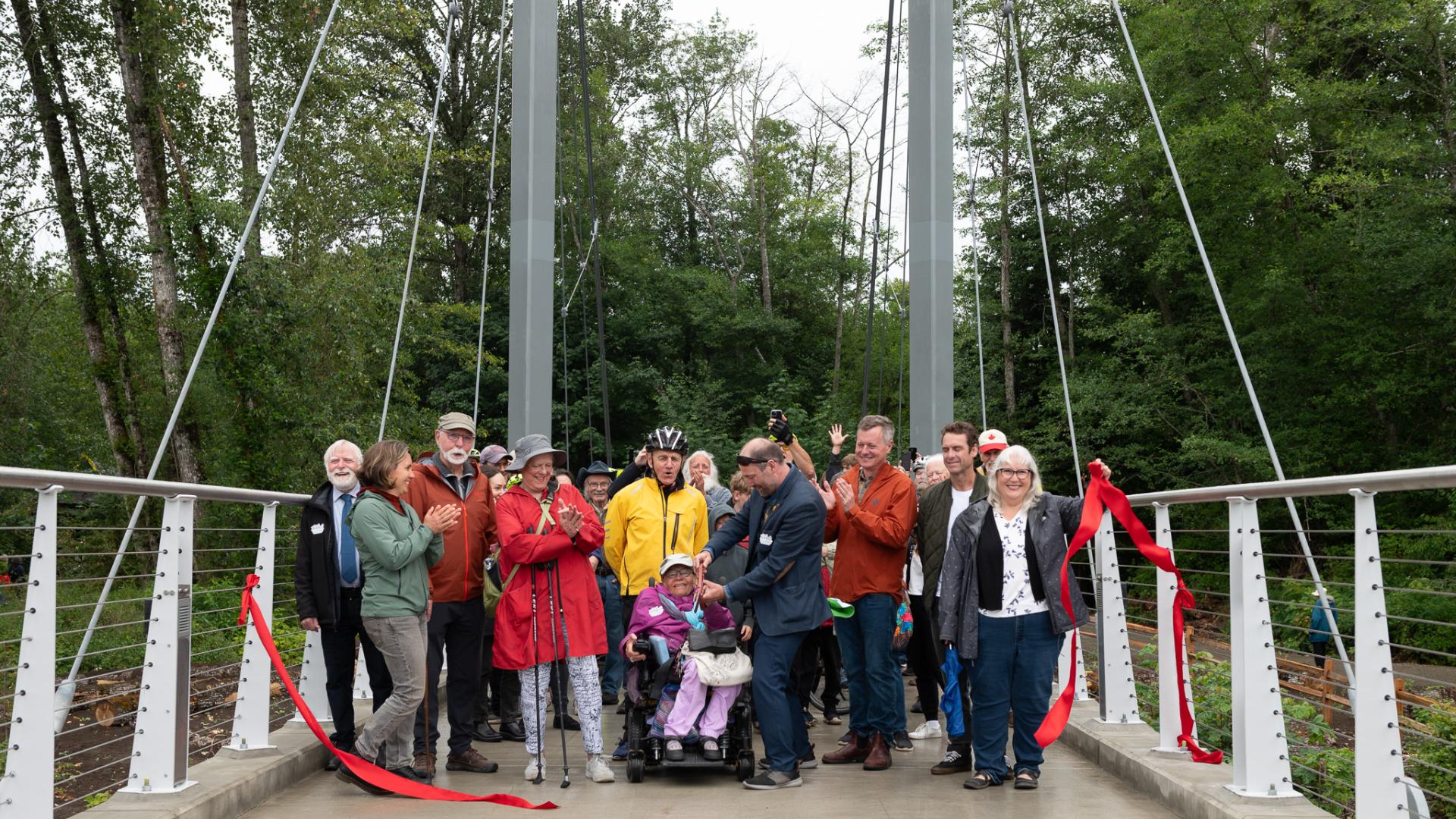
The new 6th Street Active Transportation Bridge is now open, providing an important new connection that improves accessibility, community connectivity and access to downtown gathering spaces.
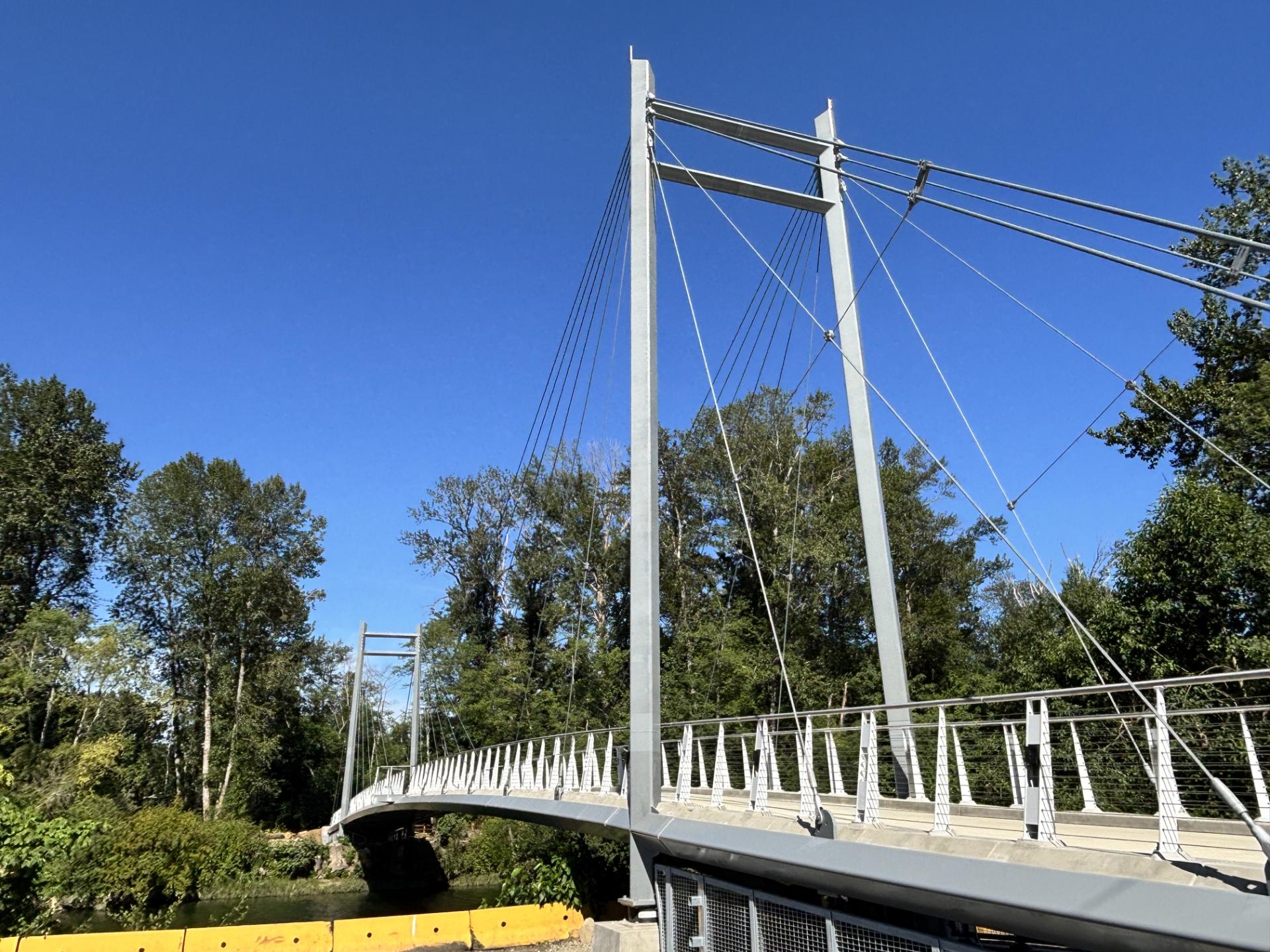
The four-metre-wide, symmetrical, cable-stayed bridge provides a safe river crossing for people walking, cycling and using other forms of active transportation.
The bridge was built by Surespan Group, a B.C.-based company specializing in bridge construction.
Updates
June 24, 2026: The bridge is now open and available for use.
June 2026: Construction has made strong progress and is now nearing completion. The bridge will be opening this summer — ahead of schedule.
May 2026: Work on the bridge is progressing well, with the bridge span and ramps now complete. Overnight work is scheduled for June 1 and 2 to install the new pathway connection between the Courtenay Riverway path entrance on 6th Street and the new bridge. This connection will link trail networks on both sides of the Courtenay River, creating a safer, more seamless route for through the community.
March 2026: Construction reaches halfway mark. Read the press release for more updates.
February 2026: The span of the bridge is now complete, with frame sections installed by crane to connect the east and west banks of the Courtenay River.
January 2026: The towers on both the east and west sides of the river have been installed, marking a key milestone in the project.
Image
Project benefits
part of wider riverfront improvements
an accessible river crossing
improved access to downtown
connections to walking and cycling routes
a new east-west connector
Why an active transportation bridge?
The City of Courtenay is investing in its downtown, moving forward projects and initiatives that will help to achieve a long-term vision for the city’s downtown hub. The 6th Street Bridge improves accessibility and connectivity, creating access to improved riverfront spaces and supporting economic development.
The 6th Street Bridge provides a key accessible connection between extensive pathways by:
Offering more confidence and safety for users of all abilities.
Further encouraging alternate modes of transportation to reduce greenhouse gas emissions created by motorized vehicles.
A map created for the Downtown Vitalization Local Area Plan shows how these connections will work.
Image
A 6th Street multi-use bridge has been in discussion for many years, and is included in the City’s recently completed Parks & Recreation Master Plan and referenced in the Transportation Master Plan for the City of Courtenay. In addition, the Downtown Courtenay Playbook notes an additional crossing at 6th Street should be explored further.
About the 6th Street Active Transportation Bridge project
The 6th Street Active Transportation Bridge is a four-metre-wide, symmetrical, cable-stayed bridge that will provide a river crossing for those who travel on foot, by bike or other active transportation methods.
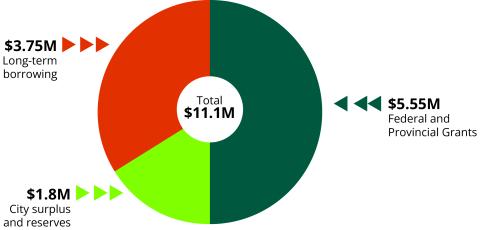
The 6th Street Bridge will be paid for with a mix of long-term borrowing, reserves and grant funds, including:
$2.5 million from the Active Transportation Fund
$2.555 million from Growing Communities Fund
$500,000 from Canada Community Building Fund
Image
The 6th Street Bridge provides an accessible crossing over the river, using the existing road right-of way on 6th Street. The bridge will connect pathways on both sides of the river — including the Courtenay Riverway and designated bike boulevard/neighbourhood bikeway on 6th Street on the west side (as identified in the Cycling Network Plan), and trails through Simms Millennium Park and routes to the Lewis Centre on the east side.
Its central location is just steps away from downtown Courtenay.
The City reviewed four different bridge design options through a detailed analysis. Each option was assessed for constructibility, environmental impacts, user experience and overall appearance.
Courtenay Council selected the cable-stayed bridge as the preferred design because it:
Requires a smaller construction area by using modular components and smaller equipment, which means fewer trees will need to be removed.
Uses materials efficiently (which is inherent to cable-stayed bridges), making it a structurally efficient and cost-effective design.
Spans the river fully, so no piers or supports are required in the water.
Provides flatter approach slopes, improving accessibility and comfort for people walking, cycling or rolling.
Offers a strong visual landmark with clean lines and limited surface area for graffiti.
The 5th Street Bridge rehabilitation project that was originally approved by Council in 2019 included widened cantilevered pathways in its design to improve cycling and pedestrian access.
However, based on feedback from the community, including the Downtown Courtenay Business Improvement Association and others, in 2020 Council voted to shift this effort to a dedicated active transportation bridge. Learn more about the 5th Street bridge project.
Construction of the 6th Street Bridge was planned for an area that has high environmental importance, and careful action will be taken to ensure wildlife and environment are protected. The City has completed and received all required provincial, federal and K’ómoks First Nation permits to undertake the work. The requirements set out in those permits include restrictions around work windows, protection of trees and habitat, active monitoring during periods of sensitive work and more.
While there is a pedestrian pathway on the 5th Street Bridge, it does not provide fully accessible access. The pathway is narrow and makes it difficult for people to pass each other (for example, a wheelchair and a mobility scooter cannot pass side-by-side). The approaches to the bridge also do not meet accessibility standards. Cyclists are asked to either dismount and walk their bikes due to the narrow walkway, or merge into vehicle traffic to ride across. This can be a barrier to people of different ages, abilities and comfort levels who may want to choose active transportation.
Once the project now awarded, the cost became fixed with the contractor meaning any changes in costs to materials, for example, will not increase the cost to the City. Additional measures also helped reduce the risk of cost escalation:
All permitting was completed before the contract was put out for award, reducing the risk of delays that could increase cost.
The bridge design requires limited excavation. Other than installing micro-piles into the bedrock, there will be minimal ground disturbance. This reduces the risk of unexpected ground conditions or archaeological findings impacting construction.
The City’s project team and the contractor are regularly reviewing the project for value-engineering opportunities to identify efficiencies and cost savings.
Several safety measures have been incorporated into the project design to help support safer travel including:
A new 4-way stop at the intersection of 6th Street, Anderton Avenue and the Home Hardware driveway.
Two new pedestrian crosswalks.
New signage to improve visibility and navigation.
Pre-cast concrete bollards separating the cycling and pedestrian lane from vehicle traffic.
Some parking spaces along 6th Street were permanently removed to accommodate the new pathway connection between the Courtenay Riverway and the new bridge.
The updated layout helps to create a safer and more connected route for path users while supporting improved visibility and safety at nearby intersections and crossings.